Why Most Factory Transformations Fail — Even When Everyone Is Trying
The 30-Second Version
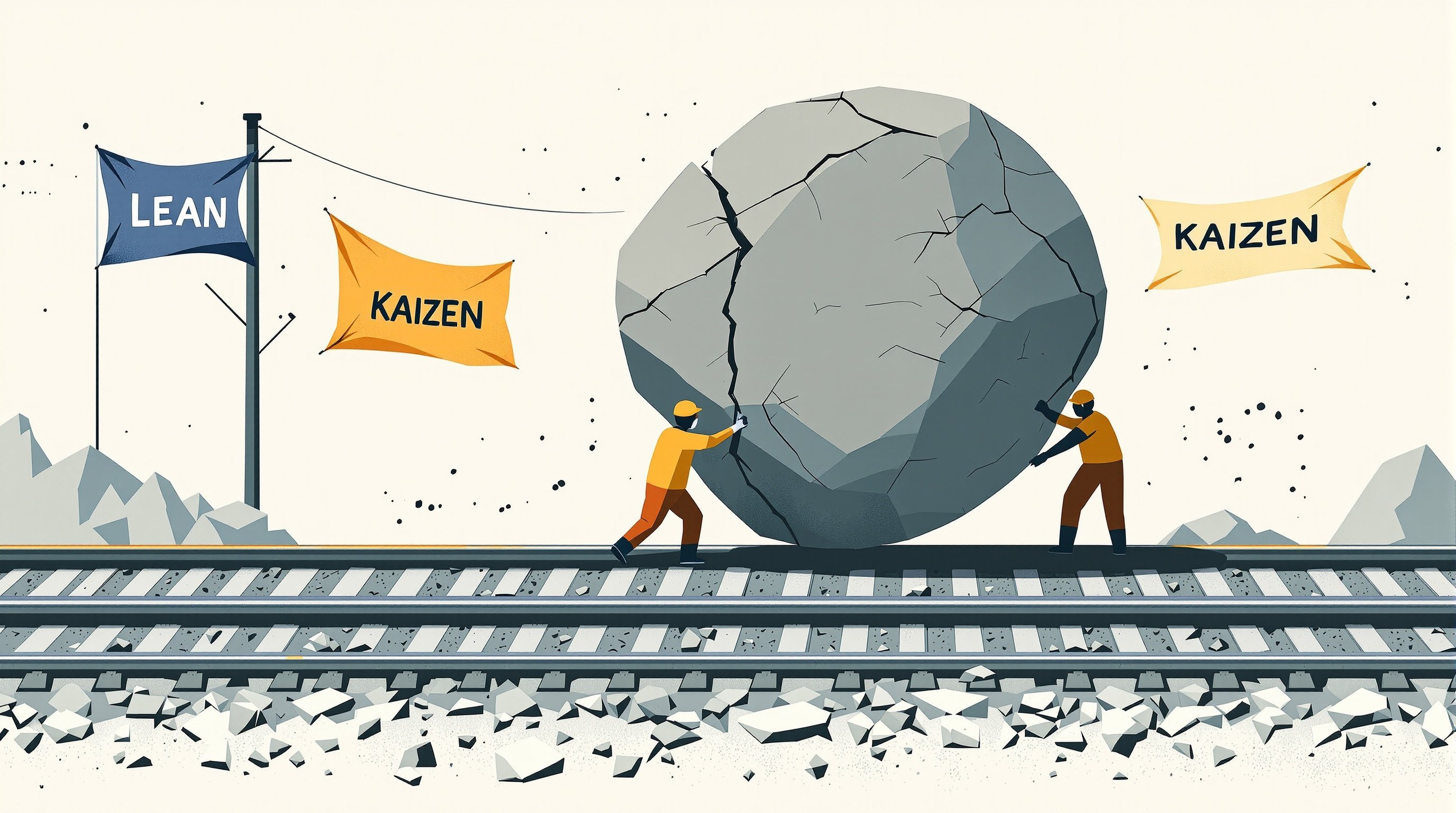
Most transformations don't fail dramatically. They fade — despite genuine effort and intent. This story explores why tools and motivation aren't enough. And what actually makes change stick in factories.
Most factory transformations don't fail loudly.
There is no dramatic collapse.
No public announcement.
No formal shutdown.
They fade.
Six months in, enthusiasm softens.
Nine months in, routines loosen.
A year later, the factory looks familiar again.
And when leaders reflect on what went wrong, the conclusion is often generous:
"People tried."
"Teams were sincere."
"Intent was strong."
All of that is usually true.
Which raises a more uncomfortable question.
Why does transformation still fail — even when effort is genuine?
The Effort Trap
In most SMEs, transformation begins with energy.
New initiatives are launched.
Targets are revised.
Consultants are engaged.
Reviews become frequent.
People work harder.
Managers stay longer.
Firefighting intensifies.
But effort, on its own, doesn't change systems.
It temporarily compensates for them.
And compensation has a limit.
What Actually Breaks
Across factories, the failure pattern is remarkably consistent.
Tools are introduced without changing daily routines
Metrics are tracked without changing decisions
Audits happen without consequences
Reviews focus on numbers, not causes
On paper, progress looks visible.
On the shopfloor, behaviour remains unchanged.
The transformation exists — but only during meetings.
When Change Depends on Willpower
The quiet killer of most transformations is willpower.
Leaders expect:
Supervisors to remember new rules
Operators to follow new standards
Managers to prioritise improvement despite daily pressure
For a while, they do.
But when systems rely on constant discipline instead of structure, regression is inevitable.
The factory doesn't resist change.
It simply returns to what the system allows.
The Missing Layer
In successful transformations, one thing is always present.
Not better tools.
Not smarter people.
Not bigger budgets.
What changes is how the factory runs every day.
Problems are surfaced early
Deviations are discussed calmly
Decisions follow a rhythm
Learning accumulates
Improvement stops being an event.
It becomes routine.
Why Good Intent Isn't Enough
Intent matters.
Leadership commitment matters.
Training matters.
But none of them replace institutional design.
Without:
Clear daily management routines
Visible plan vs actual gaps
Ownership of abnormalities
Consistent follow-up
Transformation depends on heroics.
And heroics don't scale.
The Lean Angle
What can Indian SME owners learn from this?
1. Transformation fails quietly Not because people stop caring — but because systems stay the same.
2. Tools don't transform factories Daily behaviour does.
3. What isn't reviewed daily will decay No matter how important it feels in workshops.
4. Systems outlast motivation Design for consistency, not enthusiasm.
The Bigger Lesson
Here's to systems that carry the load — not people alone.
If this made you pause or rethink something, pass it on to a fellow operator, plant head, or business owner. Inspiring stories are meant to be shared on WhatsApp, LinkedIn, or wherever good ideas travel.
Share this story: